THC Edibles Calculator: Find Your Perfect Dosage
@landenuozb414
Edibles are simple in theory, wildly inconsistent in practice. Two gummies that both claim “10 mg THC” can land in two different ways depending on your metabolism, what you ate that day, whether you’re an occasional user or you’ve built tolerance, and even how long here ago you last took a dose. That is why a THC edibles calculator is more than a gimmick. It is a way to take the guesswork out of your next session, so you can aim for the effect you want without overshooting.
When I first started calibrating my edibles, I treated every edible like it was a single event: take one, feel it, move on. That worked until it didn’t. One evening I took what seemed like a moderate amount, then kept waiting for the “real” onset. By the time it hit, I had stacked doses without realizing it. The next few hours were a lesson in patience and math. A good THC in edibles calculator would not have changed the chemistry, but it would have changed my decisions.
Below, I’ll show you how to use an edibles THC calculator mindset: start with a dose target, translate THC amounts from a label into milligrams per serving, account for tolerance and food, then adjust with a careful plan. If you’re trying to find a starting point or dialing in a more consistent experience, you’ll have a method you can trust.
Start with the only number that matters: milligrams of THC per dose
Most “THC edibles dose calculator” confusion comes from people mixing up units. The label might say something like “1000 mg total THC” for the whole package. Your body does not care about total THC. Your brain cares about how many milligrams you swallow at once.
A practical way to think about THC edibles calculator math is:
Milligrams you take = (total THC in the package ÷ number of servings) × number of servings you eat
So if an edible says 500 mg THC total and it’s divided into 25 servings, each serving is 20 mg THC. If you eat 1 serving, that’s 20 mg. If you eat 0.5 serving, that’s 10 mg. If you eat 2 servings, that’s 40 mg.
This is the heart of an THC calculator edibles approach. Whether you use a spreadsheet, a calculator app, or mental math, you’re always translating “package label” into “dose you actually consumed.”
One important edge case: some products do not have clear serving sizes. In that situation, you need a consistent way to divide the product. For example, a bar might be cut into squares by the brand. If the brand doesn’t label servings, you can divide by the number of pieces you plan to treat as a serving, then compute THC per piece. Keep it consistent so your data holds up over time.
Build a dose target that matches your goal and your tolerance
A THC edibles dose calculator gives outputs, but your inputs matter. Before you calculate anything, decide what you’re trying to accomplish. Different goals often call for different dose ranges.
Also, tolerance changes the whole equation. Someone who uses THC a few times a month will not need the same dose as someone who uses multiple times a week. And even regular users can have “tolerance dips” when they take a break.
As a general rule of thumb, edibles tend to be more intense than inhaled THC at the same nominal milligram amount because they convert in the body and often feel longer-lasting. But even with that generality, the safe move is always the same: start lower than you think, and wait long enough before adjusting.
If you’re new, you’re not just finding a dose, you’re learning your edible pace. If you’re experienced, you’re still learning how your current routine (food, sleep, stress, and product type) affects onset and intensity.
Here’s a framework that tends to produce good results without requiring guesswork:
- If you want mild effects: use a smaller dose and expect a gentler ramp.
- If you want noticeable effects: you’ll likely need a medium dose, but patience matters.
- If you want strong effects: treat that as a planned step, not an impulsive jump.
You can use a THC edibles calculator to pick a dose for “mild, noticeable, strong,” but your tolerance and your goal decide where “mild” actually sits for you.
The missing variable in most calculations: how long you wait
A lot of people don’t realize their “dose problem” is actually a “timing problem.” Edibles can take a while to start showing effects. If you dose, then dose again too soon, your calculator becomes irrelevant because the real delivered amount becomes unknown.
In real life, this is where I see sessions go wrong. Someone takes an edible, waits 20 to 30 minutes, feels only a little, assumes it’s not working, then takes more. Then the first dose finally kicks in, plus the second dose, and the result feels like an overdose even if the total math looked “reasonable.”
A practical approach is to treat the first edible like a slow-brewing drink. Give it enough time to reveal itself before you add more. The exact wait depends on the person and the product, but you should avoid the reflex to re-dose on short timelines.
If you want to use a THC in edibles calculator safely, your “dose” is not just the milligrams, it’s also the time window in which you decide whether to change the dose.
Using a THC Edibles Calculator the right way (with real numbers)
Let’s run a concrete example, the kind you’d plug into a THC edibles calculator.
Example 1: A label-based dose
Imagine a bag of gummies labeled:
- Total THC: 300 mg
- Servings: 30 gummies total (so think 30 servings)
That means each gummy is:
- 300 mg ÷ 30 = 10 mg THC per gummy
Now say you eat:
- 1 gummy: 10 mg THC
- 2 gummies: 20 mg THC
- 3 gummies: 30 mg THC
This is simple, but it’s also where people go wrong. If someone thinks “300 mg” is the dose, they might eat far too much. Your calculator should be built around “10 mg per gummy,” not “300 mg total.”
Example 2: You want a specific target dose
Now suppose you want to take about 15 mg THC and your gummies are 10 mg each. A THC calculator edibles method would tell you:
- 15 mg ÷ 10 mg per gummy = 1.5 gummies
So you’d plan to split one gummy and take the equivalent of half. If splitting is inconsistent, you might instead choose a step like 1 gummy first, then reassess later using the timing approach described earlier.
Example 3: A tincture, not pre-portioned
Tinctures often say something like “X mg THC per mL” or “Y mg per serving,” but sometimes the dropper is unclear. If your tincture says:
- 10 mg THC per 1 mL And the dropper measures 0.5 mL, then:
- 0.5 mL = 5 mg THC
Again, a THC edibles calculator mindset is about converting the label into what you actually deliver.
A quick starting-dose planning method (without pretending certainty)
If you want the practical benefit of a THC edibles calculator without chasing false precision, plan in steps.
This is the part where most people want a simple “one number” answer. The truth is you can’t produce one number that fits every body and every edible. What you can do is use math to keep your next decision controlled.
Here’s a simple planning routine you can apply to most THC edibles dose calculator scenarios:
- Identify the THC per unit (per gummy, per piece, per mL, per dropper).
- Choose a target effect (mild, noticeable, strong) rather than “more is better.”
- Select an initial dose you can live with if it feels stronger than expected.
- Wait long enough to evaluate the first dose before changing course.
- If you adjust, change by a small amount, not a leap, and keep notes.
That last step is underrated. A calculator helps you compute dose, but notes help you learn your personal response. Over time, the “calculator” becomes your personal model.
Why food and routine change the dose feeling
Even the best THC edibles calculator can’t fully compensate for how your body processes THC on a given day. Food makes a big difference for many people. Some notice stronger effects when they take edibles with or after a meal, and others notice the opposite depending on what they ate and how their digestion works.
Also, consider routine and state of mind. If you’re tired, stressed, or in a busy environment, your “dose tolerance” can change because your nervous system is already leaning one direction.
This is where professional users often behave differently from casual users. They don’t just calculate the milligrams, they calculate the conditions. They pick a time with enough space afterward, they avoid stacking doses, and they treat edibles like a controlled experiment.
If you’ve ever taken an edible on a chaotic night and felt like it hit way harder, you already know the truth. The math may have been right, but the context shifted.
The calculator approach for “mixed products” and microdosing
Not all edibles are equal. Some contain CBD alongside THC. Some are fast-acting formats, some are standard. Some have different ratios that may feel smoother for some people.
If you’re using anything that includes multiple cannabinoids, you can still use a THC in edibles calculator approach for the THC portion. But you’ll want to adjust expectations because the overall subjective experience might not track THC milligrams perfectly.
Microdosing adds another layer. People who microdose often care less about “getting high” and more about specific daytime effects. With that goal, it’s still valuable to compute doses precisely, because consistent dosing is what makes microdosing meaningful.
A THC edibles calculator is helpful here because it helps you avoid “accidental microdose stacking.” If your gummies are 10 mg each and you decide to eat “just one tiny bite,” you still need a way to estimate how many milligrams that bite represents.
If the product is too hard to measure, the safest microdosing approach is to use a unit that can be dosed consistently, like a scored product or a tincture with an accurate measurement.
Common mistakes a THC edibles calculator can’t fix (but you can)
Even with good math, edible dosing has pitfalls. These are the ones I see repeatedly, including in conversations with friends, customers, and people who show me their packaging and ask where they went wrong.
- Using total THC instead of per serving
- Re-dosing too soon because the onset felt slow
- Skipping context like food and time of day
- Changing product types mid-experiment
- Treating “it didn’t work” as a reason to jump doses
The bigger theme is control. A calculator gives you structure, but your behavior decides whether the session stays predictable.
Where “Ounce of Hope” fits in practical dosing conversations
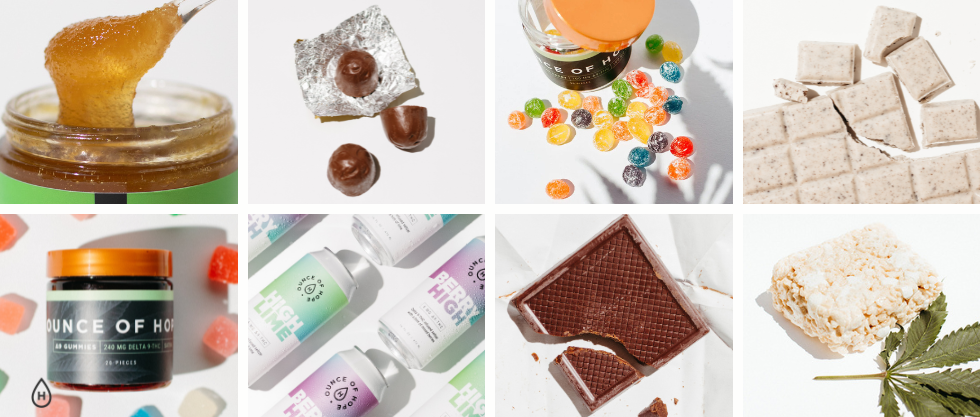
You might have seen “Ounce of Hope” referenced in community discussions around responsible cannabis use. In practice, the most useful part of that kind of brand or community message is not a promise about exact effects. It’s the emphasis on careful, measured use, especially for people who want to avoid unpleasant surprises.
If you’re using any guidance associated with “Ounce of Hope” or similar harm-reduction framing, treat it as a reminder to be conservative, not as a substitute for dose math. Pair their “start low, go slow” philosophy with your own THC edibles dose calculator calculations, and you’ll get both structure and safety.
A simple “calculator worksheet” you can run in your head
You do not need a fancy tool to compute doses, but you do need a consistent method. Here’s a mental worksheet you can reuse whenever you look at a label for THC edibles calculator use:
First, find THC per serving (or compute it). Then multiply by how many servings you plan to take. If you’re aiming for a dose target, divide your target by the THC per serving to find how many servings that corresponds to.
Let’s say you have:
- total THC = 200 mg
- servings = 20
- THC per serving = 10 mg
If you want about 25 mg THC, you do 25 ÷ 10 = 2.5 servings. Then you decide how to handle the 0.5, based on how accurately you can measure or split.
That’s it. That loop is what people mean when they say “THC edibles calculator.” It’s not magic, it’s conversion.
Adjusting when you overshot or undershot
Every dosage plan eventually meets reality. If you feel like the dose was too light, the instinct is to increase quickly. If you felt too strong, the instinct is to avoid math next time and just guess.
Try a middle path: use the session result to update your next dose range.
If your edible landed stronger than expected, reduce the next dose by a meaningful but not extreme amount. Your goal is to avoid repeating the same error while still learning. If your edible felt weaker than expected, increase gradually, and only adjust after you’ve confirmed the full onset window.
This is especially relevant if you’re using a THC calculator edibles approach to get consistent effects across products. Different formulations can shift how you feel at the same THC milligrams, so your adjustments need to be incremental.
Safety and practicality, stated plainly
Edibles affect people differently. I’m not going to tell you that a formula will guarantee a specific mental state, and anyone who claims otherwise is overselling what math can do.
Use conservative dosing practices, avoid driving, and be mindful of interactions with alcohol, sedatives, or other substances that affect reaction time and coordination. If you have health conditions or take medications, it’s smart to consult a clinician for individualized advice rather than relying on a calculator.
A THC edibles calculator is a dosing tool. It is not medical treatment, and it is not a substitute for professional guidance.
Your next step: build your own dosing consistency
If you take one thing from this, make it the process, not the number. The best THC edibles calculator is the one that helps you stop repeating the same mistake. Compute the dose you’re actually taking. Track timing. Keep context consistent when you can. Then adjust slowly.
Over a handful of sessions, you’ll start to recognize patterns like:
- how food changes your ramp
- whether certain doses hit too sharply for you
- how long it takes for the peak to arrive
- what “mild” feels like when you repeat the same conditions
That’s when the calculator stops being a tool you use once and becomes a system you trust.
If you want to search for related terms, you’ll see variations like “THC in edibles calculator,” “THC calculator edibles,” and “THC edibles dose calculator.” They’re all basically pointing to the same idea: you deserve predictable dosing. The conversion math is the easy part. The real win is pairing it with patience and a plan.
And the next time an edible tastes a little too strong, you won’t panic. You’ll already know what you took, why it happened, and what to do next.